RoboBoat - Mechanical
RoboBoat 2025 > Mechanical
Overview

We elected to use a catamaran over single-hull designs due to higher stability in water combined with lower drag. We based our hull design off Institut Teknologi Sepuluh Nopember’s Nala Proteus while employing our own manufacturing techniques with fiberglass, a durable material used by several teams.
Barco Polo Hull
We employed the same 2024 model. The CAD was used to form the positive polystyrene molds to fit the shapes. To increase the boat's compressive strength, we applied a layer of fiberglass sheet and used fiberglass mesh. Before pulling the pontoons out into the sun for the final cure, we chose Sunrez's curing polyester vinyl for optimum working time and flexibility. In order to prevent water from collecting in the hulls in the case of a water intrusion, the positive molds were left within the pontoons.
Water Pump


Networking with other RoboBoat teams, we decided on procuring an off the shelf water pump from Amazon. Coupled with a nozzle to accelerate the water we are able to perform the Water Delivery task 2 feet away from the Orange Vessels. The pump extracts water from the lake at the competition venue.
Racquetball Launcher
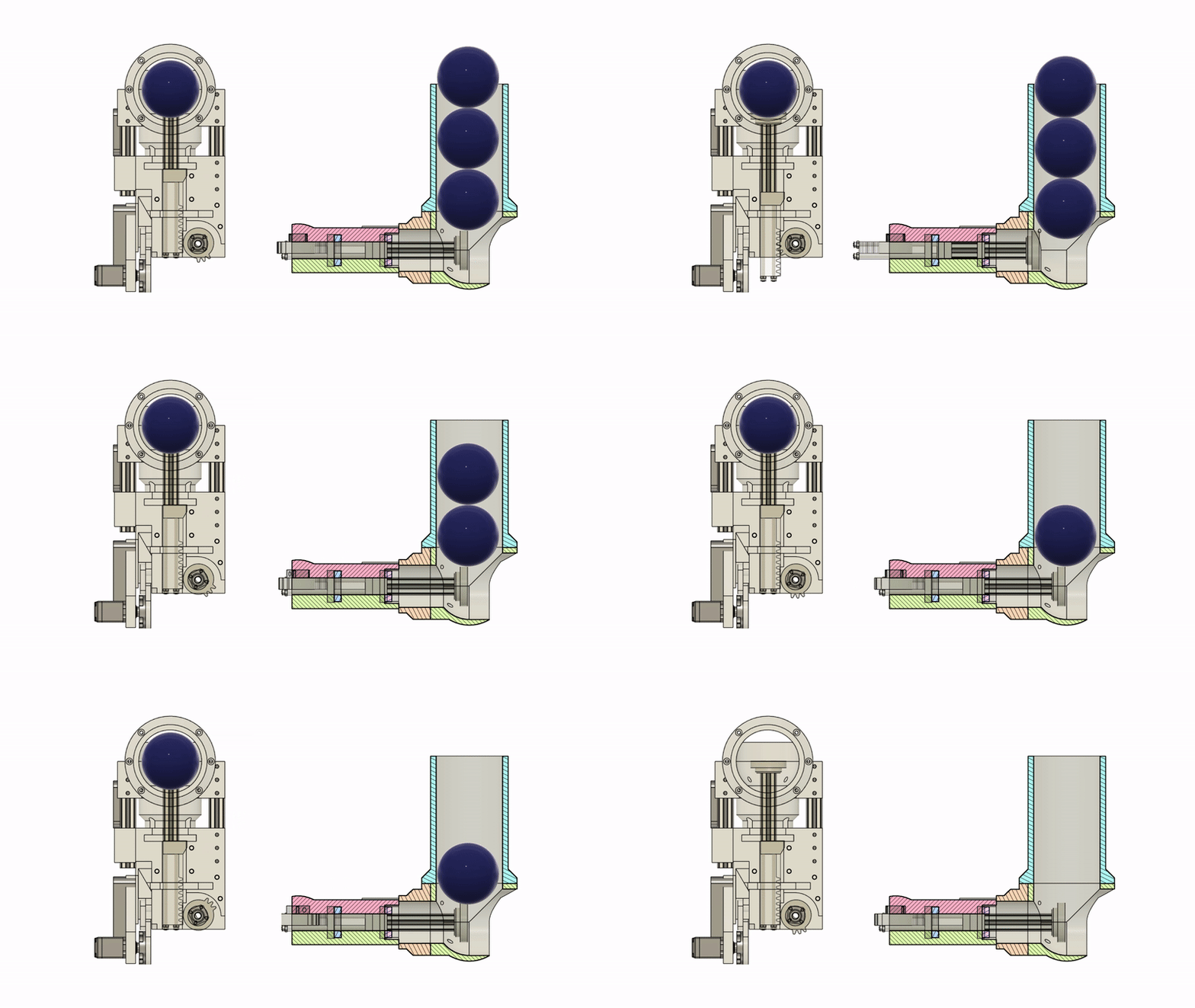

Leveraging past experience from land vehicle competitions the team decided to implement a puncher mechanism. A DC motor powers the driving gear, which contains only 3 teeth. The gear compresses the spring by drawing back the rack on the punching rod, as the drive gear continues the rotation, the rack slips and the punching rod launches the racquet ball towards the Black Vessels.
Thruster Guards
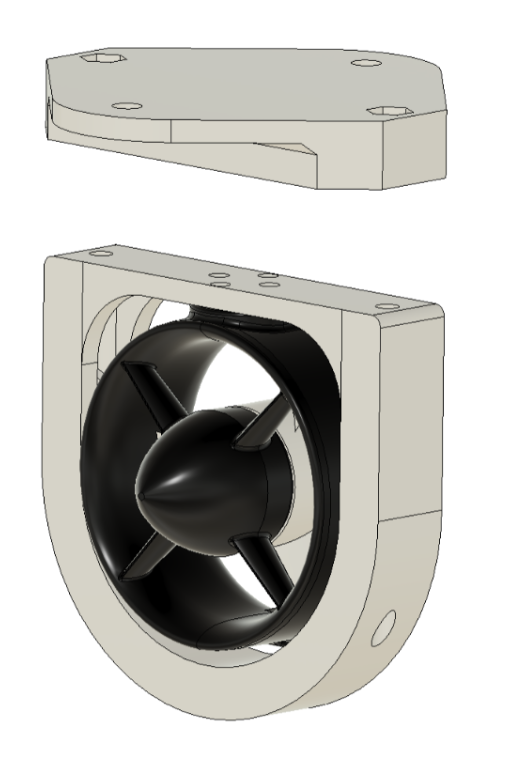
From our previous experiences in RoboSub and RobotX, our team has realized the importance of strong thruster mounts and shrouds. These new thruster guard enables positioning of thrusters and provides a failure point during harsh impact which will fail before the injection molded case of the T200 thrusters fail.